Step away from the usual and try wines made from indigenous grapes… wine grapes that are unique to their specific region of origin, and are becoming the hottest thing on every wine geek’s to-taste list
Sitting among a group of my wine friends in the fertile Dealu Mare region near Romania’s Carpathian mountains last October, I took an instant shine to some little-known native wine grapes whose name I was just learning to pronounce. The first encounter with these was at the tasting room of the Domeniile Săhăteni winery headlined by Romania’s top female vintner Aurelia Visinescu. The black grape was Fetească Neagră. That day, Visinescu generously opened her cellar for us to acquaint ourselves with her wines – and here’s where we encountered her Fetească Neagră called Anima ‘3 Fete Negre’, consisting of 3 vintages of the grape (ripe black fruit and spice, good acidity and tannins.) The next day, we travelled to Drăgășani , another wine region that housed the historic winery of Prince Stirbey. On the terrace, as maverick winemaker Oliver Bauer talked winemaking, we sipped on a delicious Stirbey sparkling rosé he had made from the indigenous Novac grape.
Over the next three days, we tasted many other grapes, several of whose names I am still struggling to pronounce, despite acquiring a decent mark on my Romania research paper several weeks ago. Besides the Feteascăs (Neagră, Albă, Regeală), they also include Crâmpoșie Selecționată, Tamâioasa Românească, and Busuioaca de Bohotin – this last one the ultimate tongue twister we gave up trying to pronounce, simply calling it the ‘BB grape’ – among many others. Romania’s location (the same latitude as Bordeaux, 45 degree N), climate, and topography are ideally suited for viticulture, so it grows a large variety of native and international varieties. To me, their native grapes are the standout.
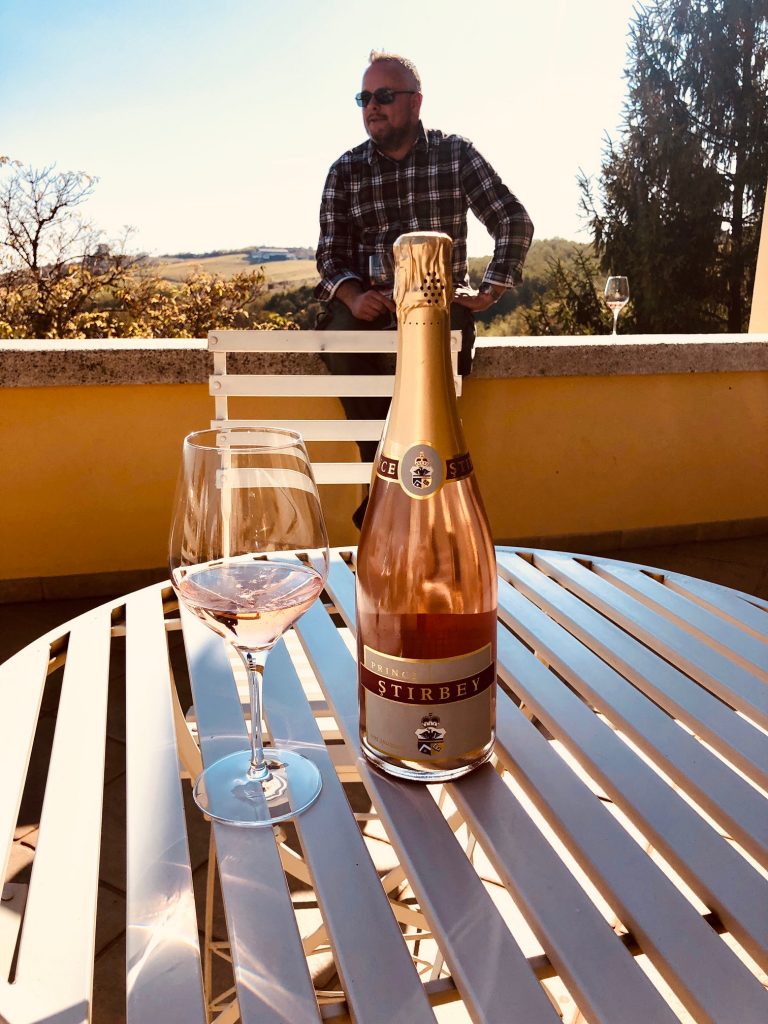
The sparkling rosé of Romania’s Prince Stirbey winery. In the background, winemaker Oliver Bauer
The trip set me thinking about indigenous grapes and how under-explored they are by wine drinkers in general. For instance, have you tried Switzerland’s Chasselas or Gamaret? You might think you know your French grapes, but have you tried a dry version of Petit Manseng? The white grape makes exquisite sweet wines in Jurançon (I tried a beauty from Domaine Cauhapé at a tasting in Bordeaux last year) and now is being used to produce dry wines as well, as reported in an earlier guest blog post by Brinda Bourhis on Château Cabidos in IGP Comté Tolosan. Or Georgia’s Saperavi? Unless you are a wine nerd or passionate enthusiast, it is unlikely you might have tasted the entire spectrum of grapes grown in every wine region of the world.
Why do native grapes thrive in their homelands?
Science will tell you that soils and climate, along with aspect and topography have much to do with the way the grapes grow and the wines they make. Indigenous grapes have grown in their home regions for hundreds of years or more and have adapted well to the terroir. The wines they make go beautifully with the local food (ever had a Chianti or Brunello with pici aglione or a succulent bistecca? You will know what I mean.)
It is impossible to touch upon every grape grown. So here is a brief attempt to acquaint you with some fantastic indigenous grapes that are making their presence felt (at last!) on the world stage. And some of my own favourites.
Spain
Okay, we all know Tempranillo, the grape behind DOCa Rioja’s structured, ageworthy wines, and what a star it is. But have you tried a wine made from Godello (called Gouveio in Portugal)? The white grape Godello is from the north-west Spanish region of Galicia, and makes wines with good acidity and mineral notes. Mencia (Jaen in Portugal) is grown in Castilla y Leon and Galicia and has reached near-cult status thanks to Bierzo’s Descendientes de J. Palacios (100% Mencia wines) of Rioja’s famous Palacios family. The champion of Spanish grapes, the redoubtable Sarah Jane Evans MW was responsible for my taking a second look at these grapes during a recent masterclass in London.
In Catalunya, Miguel A Torres and Familia Torres, known for their foresight and commitment to sustainability, have been working quietly to revive some very obscure native grapes retrieved from the dusty annals of history. As the story goes, Torres ran classified ads in the local newspapers to find farmers might still be growing lost grape varieties. Time and patient research found them pre-phylloxera vines of the aromatic ancient grape Forcada. Another discovery, Querol has now found expression in their Grans Muralles wine. Native grapes now form a big part of their work, called the Ancestral Varieties Project.
Portugal

Image: Barbara A Lane/Pixabay
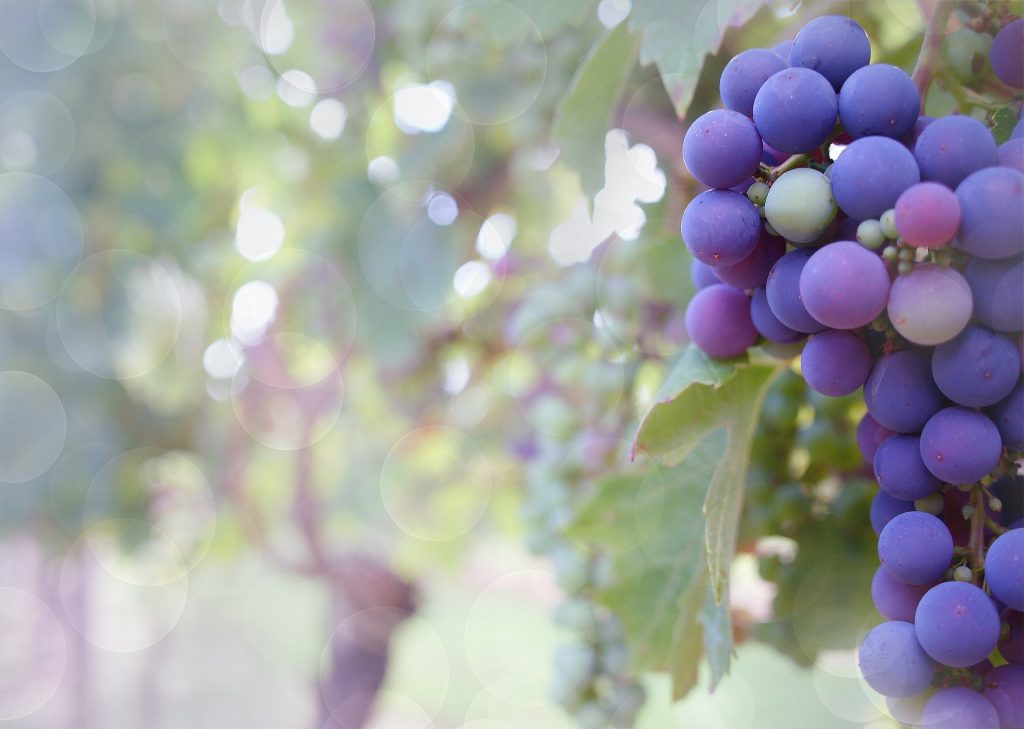
For the casual drinker, Portugal can be both confusing with its extraordinarily wide range of native grapes (250+ commercially planted). While Touriga Nacional (and indeed Touriga Franca, Tinta Cão and Tinta Roriz/Aragonez aka Tempranillo in Spain, has found widespread recognition thanks to the Port industry) there are many more worthy of exploration. Touriga Nacional makes astoundingly rich and delicious unfortified red wines, and many port houses are now also making still wines from the grape. Do also try and track down wines made of Encruzado (the white star grape from the Dão, floral with rich minerality) and the Portuguese Alvarinho (Albariño across the border in Spain) from Vinho Verde’s Monçao or Melgaço is a deliciously fragrant, high acid delight. There are many, many more (Fernão Pires aka Maria Gomes, Antão Vaz are grapes, not people!) but I will let you discover them for yourself. If all this variety is not enough, Portugal arguably offers the best, most amazing price-quality ratio for all its wines.
Greece
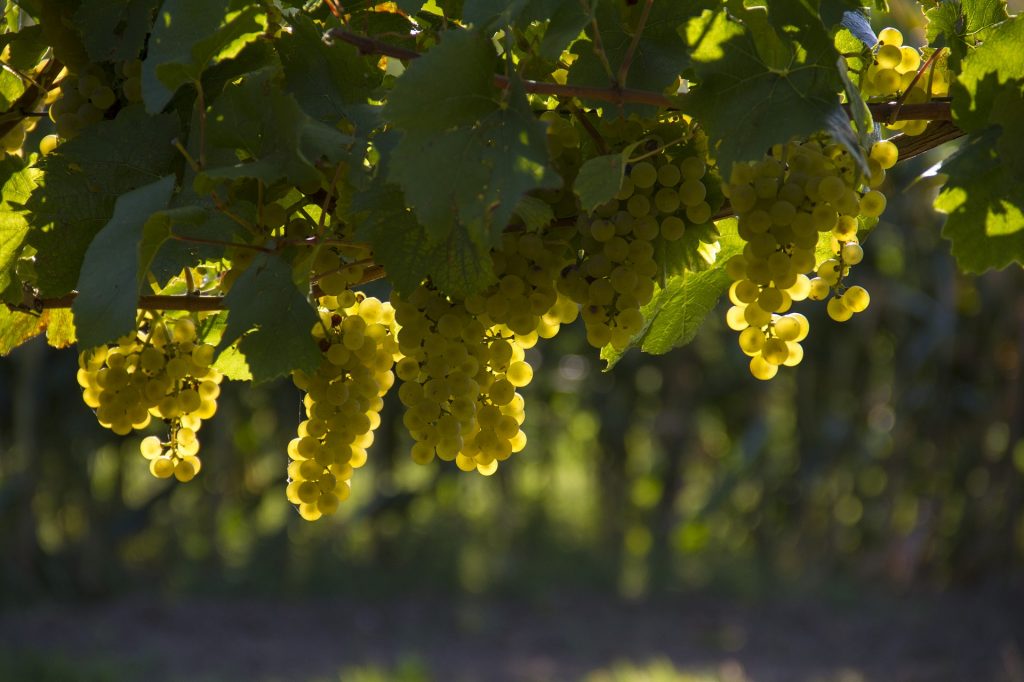
Greece and especially its islands are finding their spot in top wine lists of late. If you have not tried an Assyrtiko from Santorini, where it is uniquely basket-trained, you are missing something special. Rich, intense, and age-worthy with high acidity and citrus notes, it is delightful with food. Follow that up with the full-bodied, aromatic white Malagousia, and red wines from the grapes Xinomavro (pale, with high acidity and grippy tannins, from Naoussa) and Agiorgitiko (from Nemea). I recently had an excellent richly complex Xinomavro in London’s Ampéli restaurant, and I was struck by how Barolo-like and food-friendly its aged versions were. At a quarter the price.
Austria
Austria has already made its Grüner Veltliner known in fine wine circles, and why not: this complex, full-bodied grape is a sommelier’s delight – extremely versatile and food-friendly, it thrives in several regions especially Kamptal, Kremstal and the Wachau and its prestige has spread far beyond Austria’s borders. But do spare a thought for Austrian black grapes: Blaufränkisch (spicy, high tannins) from Neusiedlersee; the Niederösterreich native, the red-fruited Saint Laurent, and their progeny, the most prolific black grape in Austria, Zweigelt (red fruit, soft tannins). They will surprise you.
Italy
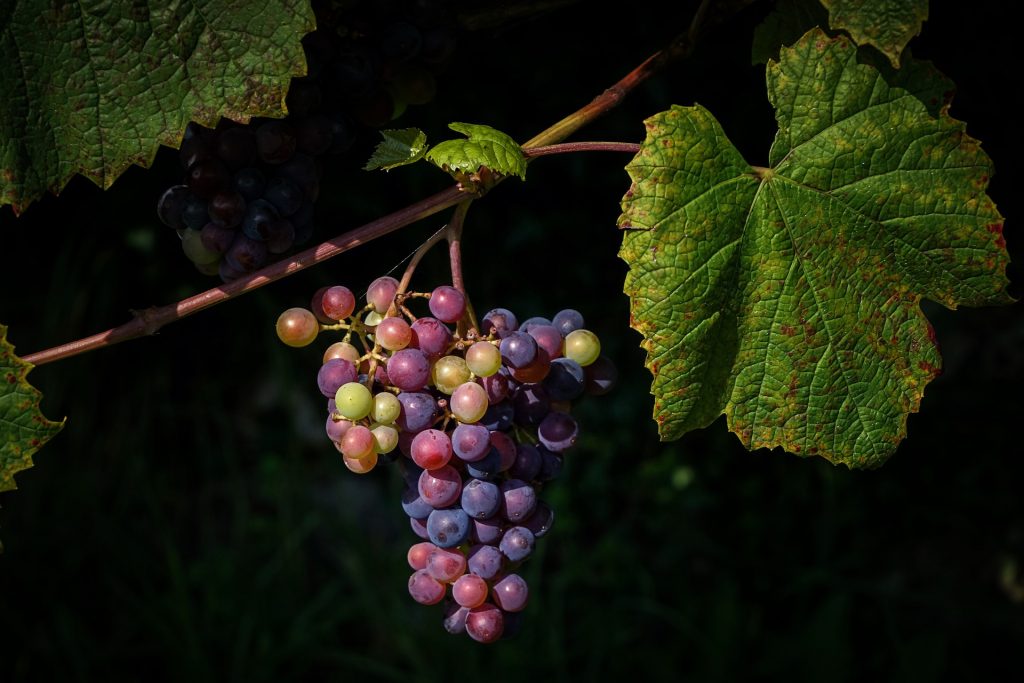
Who doesn’t know the fine wines of Italy? But just for a second, let’s move beyond its Sangiovese (Chianti) and Nebbiolo (Piemonte’s Barolo and Barbaresco) to Corvina which is native to the Valpolicella region (which you might have already tasted in the majestic Amarone della Valpolicella). Also consider two grapes from southern Italy: the richly concentrated age-worthy star of Taurasi DOCG, the black grape Aglianico and the full-bodied semi-aromatic white Fiano of Campania. And Piemonte has rediscovered the rare white Timorasso grape, often forgotten in the resounding rah-rahs for its regal Nebbiolo. I could write more on Italy’s native grapes (it has over 2000, according to experts) but I must move on.
Sicily
I have mentioned Sicily separately because it is quite unique, with its own distinct identity… and grapes. Somms and wine critics have been waxing eloquent about its Nerello Mascalese, grown on the rich volcanic soils of Etna and the dominant grape in Etna Rosso DOC. It has distinctive minerality, beautiful fresh acidity, rich red fruit and medium tannins. But that is not all to discover in this tiny island. Try Cattaratto, Nero d’Avola and Grillo as well.
Hungary
Everyone worth their sugar toffee has heard of Tokaji, that exqusite sweet wine from Hungary. But every day is not a 5 puttonyos day, and realizing that, Hungarian winemakers are putting their considerable skills to making a fine dry Furmint, the grape that makes the luscious Tokaji. With its naturally high acidity, it makes for a zesty wine with a light body and citrus flavours, far more affordable and very food-friendly too. I am a fan.
While you are at it, try some Hárslevelű too.
I shall stop here, only because one blog cannot cover the vast number of vitis vinifera grapes that grow in every corner of the globe. Jancis Robinson, in her definitive tome, Wine Grapes (Jancis Robinson, Julia Harding, José Vouillamoz), lists no less than 1368. The OIV has determined there are 10,000, many of them virtually unknown to even the biggest wine geek.
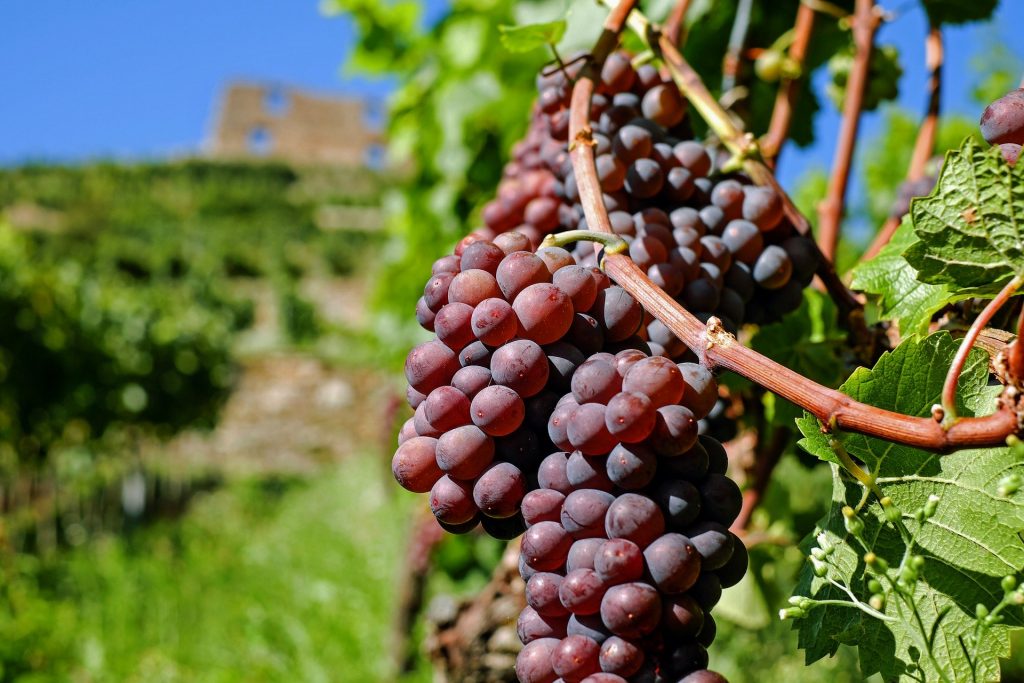
But even if you are a Chardonnay fan or a Cabernet lover, just step off the beaten path for a bit, and let your wine journey be a discovery of native grapes from wine regions around the world.
Read up the Chateau Musar story, for instance. Famous for its indestructible reds, it makes its white wines from two almost-unheard of Lebanese grapes: Obaideh and Merweh. Musar’s owners, the Hochar family advise drinking their white wines after several hours of decanting, with red meat!
But that is a story for another day.
Meanwhile, track down wine from one of these grapes, or the hundreds more waiting in the wings.
Thank me later.