The world’s top-selling sparkling wine continues to make its presence felt at celebrations everywhere, including India. Here are a few things you should know about Prosecco
“The characteristics of Prosecco are its strengths: its freshness, its direct taste, its floral and fruity nose and taste which are recognizable, its balance between acidity and residual sugar content, its moderate alcoholic content.
While drinking it you do not need to think in-depth to analyse it; it is easy and perfect for everybody. It is versatile, suits the entire meal from aperitif to dessert, and to the art of mixology thanks to the varying residual sugar contents. It pairs well with a lot of dishes, also from international cuisines. Then, this is a wine which offers a good value-for-money.”
These are the words used by Luca Giavi, director, Consorzio Prosecco DOC, the managing body of Italy’s Prosecco DOC region. He makes his case with ease: but then those who have tasted this sparkling wine know that Prosecco is instantly likeable and its rising sales have proved this fact.
At Vinexpo Hong Kong in May 2018, a standing room only masterclass by Debra Meiburg MW explained the simple joys of drinking Prosecco. Fresh, easy-drinking and affordable, it was the perfect drink for the cola generation transitioning to wine, she said.
When you pick up a glass of sparkling wine at your next soirée, will it be Prosecco or not? If you’re a fan, here a few things to know.

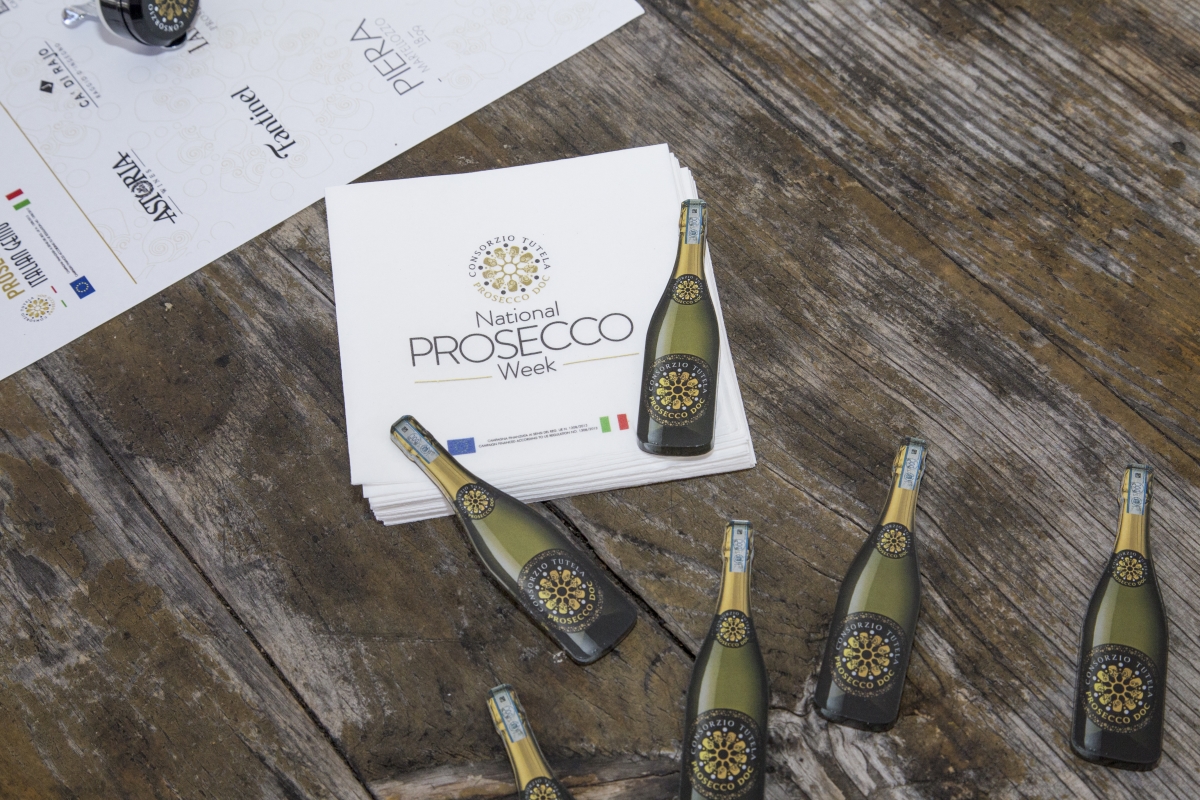
A Prosecco and pizza event during National Prosecco Week in the USA. Images: Consorzio Prosecco DOC.
Prosecco is made in Italy.
… Not in France, the US or anywhere else in the world. To be specific, Prosecco is made in the north-east of Italy, the Glera grapes grown on the picturesque slopes of the Veneto and Friuli-Venezia Giulia wine regions. Since July 2009, the name ‘Prosecco’ has come under DOC law, which means that wines labelled Prosecco come only from the specific areas of north-eastern Italy.
Wait on. Within the Prosecco region, there is a smaller DOCG region (Denominazione di Origine Controllata e Garantita, indicates higher quality) between Conegliano and Valdobbiadenne making Prosecco Superiore DOCG.
Giavi explains:
“In 1969 the Prosecco Conegliano Valdobbiadene DOC was established and included 15 municipalities in the area between Conegliano and Valdobbiadene. This area in 2009 was recognised as DOCG. The current Prosecco DOC was established in 2009. The main differences between Prosecco DOC and the DOCG area are the area of production, the yield per hectare, the number of vineyards, the annual production.”
In fact, Italy produces several sparkling wines. Prosecco is the highest selling among them.
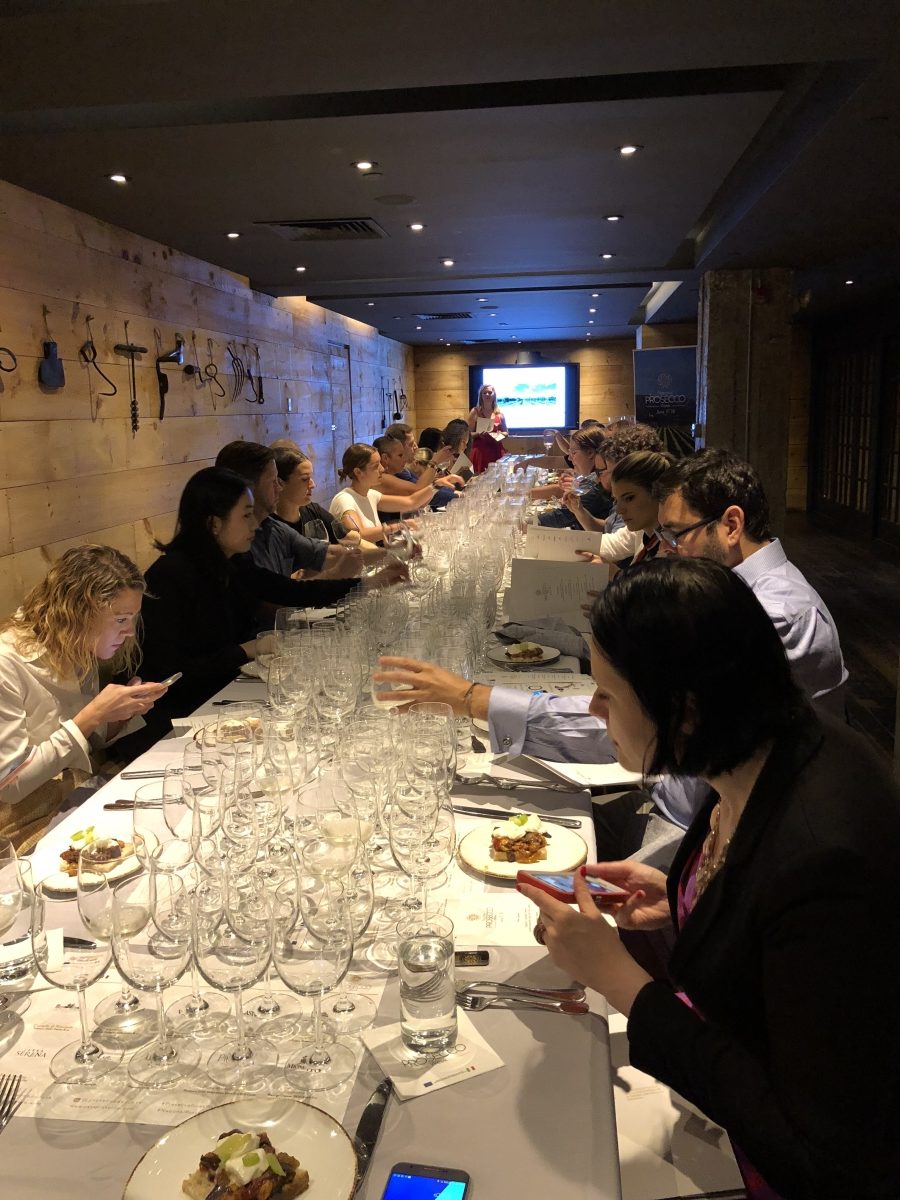
National Prosecco Week 2018: A masterclass in progress
World’s largest selling bubby
Prosecco outsells other sparkling wines not only in Italy but also around the world. Reports indicate that in 2014, this Italian sparkling wine proved the most popular in the world with 320 million bottles globally shipped against 307 million bottles of French champagne.
Prosecco has cornered 20% of sparkling wine sales last year and has a major focus on export markets, with the UK, US and Germany accounting for 75% of Prosecco DOC sales in 2016. Of these, the UK leads – 112.7 million bottles of DOC Prosecco were drunk in the UK in 2016. Predictions for 2020 indicate that Italy will be at 12.66 million, followed by the UK (8.3), the US (4.17) and Germany (3.6).
It is also estimated that by 2020 the worldwide consumption of Prosecco is expected to reach 34-35 million 9 litre crates, despite concerns that the market had topped out. Decanter has recently quoted Gianluca Bisol, president of the premium Prosecco producer Bisol as saying, “Thirty-one years ago, there were just 30 producers and only about 25 million bottles produced. People thought that was the high point of Prosecco and that the UK would never be weaned off Champagne. And look what happened.”
Look, indeed.
I asked Giavi about the possible impact of Brexit on Prosecco. His replied:
“The UK is the first market for Prosecco DOC in general. As regards the Brexit, in the document released by the British Government recently, we definitely think that the right path has been chosen. The document doesn’t answer all the questions, in particular on the protection of the existing Designations of Origin. We are sure some solutions will be found in order not to damage important British productions, like the Scotch whisky.”
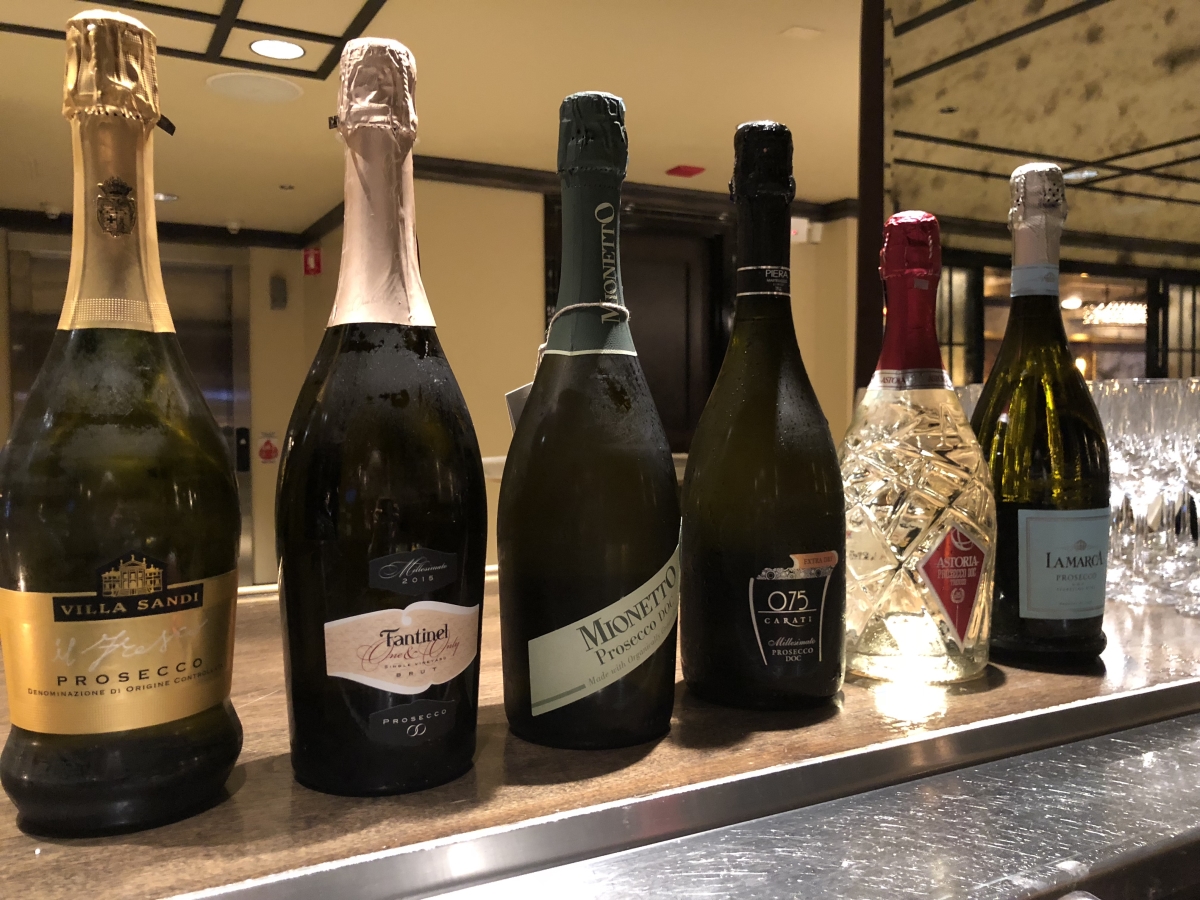
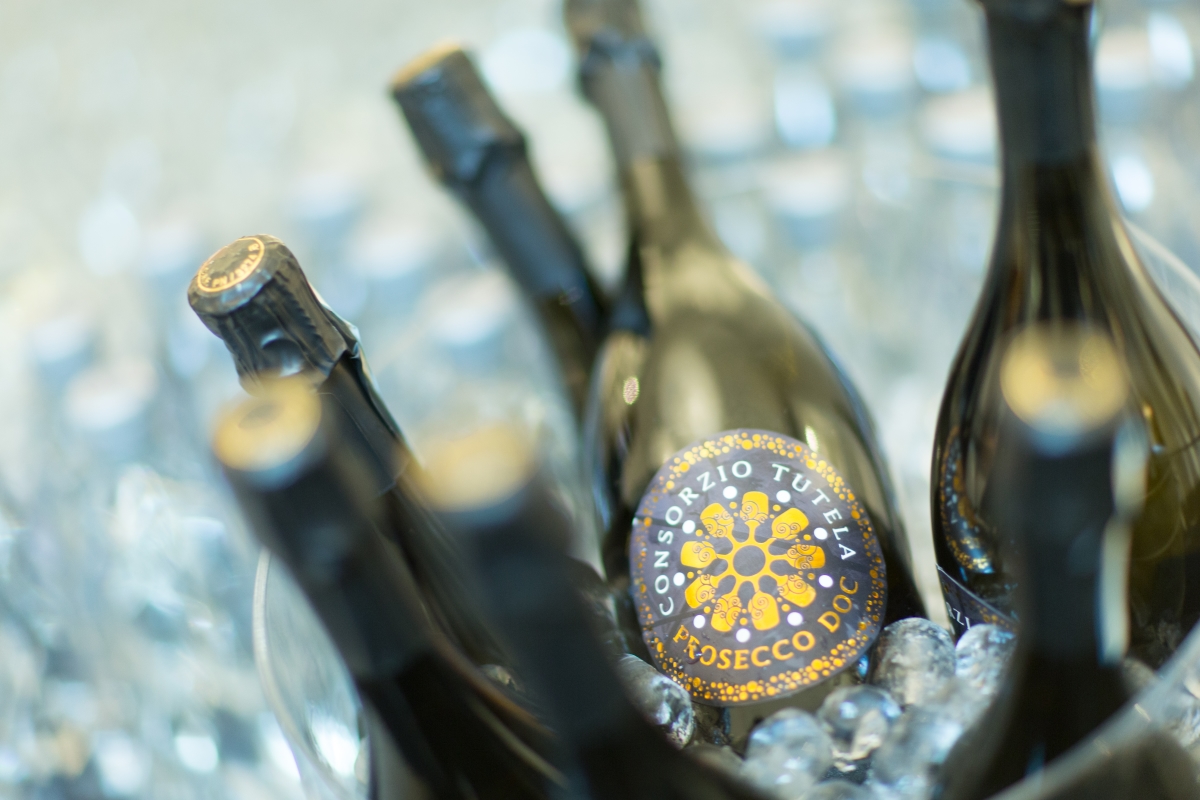
The lineup of Prosecco bottles at the Vinexpo Hong Kong 2018 masterclass
Like Champagne? No, Prosecco is different
For one, Prosecco is made with the Glera grape (earlier known as the Prosecco grape), unlike Champagne. Secondly, it is made by the tank or Charmat method (a second fermentation in tanks); champagne is made by the traditional method or méthode champenoise (fermented directly in the bottle). These differences are what gives Prosecco its easy, fresh fruity easy-drinking profile. In the sparkling wine stakes, it is also far more pocket-friendly than Champagne.
Another interesting fact: the fizz in Prosecco is less than that of champagne – 2-4 atm pressure (atmosphere is the unit of measure for pressure inside a bottle of sparkling wine) inside a bottle of Prosecco compared to the 6-7 atm of Champagne.
Unlike vintage Champagne, Prosecco is intended to be drunk young, within a couple of years of production.
So Prosecco = only sparkling, right?
Not so. Just to confound you, here is some information on three different styles of Prosecco. One of them with no bubbles at all!
Prosecco DOC Tranquillo (still – 1% of Prosecco production)
Prosecco DOC Frizzante (Semi-Sparkling – 19%)
Prosecco DOC Spumante (sparkling – 80%)
Spumante is the most popular Prosecco and also comes in: Brut (very dry), extra dry (the most common style, most suitable as an aperitif.) and dry (with a higher sugar content.)
What’s not to love? As Meiburg concluded in her masterclass, “As soon as you put bubbles in someone’s hands, they feel a party has started.”
The Prosecco DOC Consortium organised the National Prosecco Week in the US from June 11th to June 16th 2018 with a variety of masterclasses and food events.
Several brands of Prosecco sparkling wine are available in India. Check with your retailer for the best buys and current prices.
For more information, visit https://www.prosecco.wine, the official website of Consorzio Prosecco DOC.

You might also like